
AI Detection Software Guidance by UT Austin

The University of Texas at Austin has come out with guidance on the use of AI Detection Software. The one-page guidance is a model of style and substance; elegant and to the point.
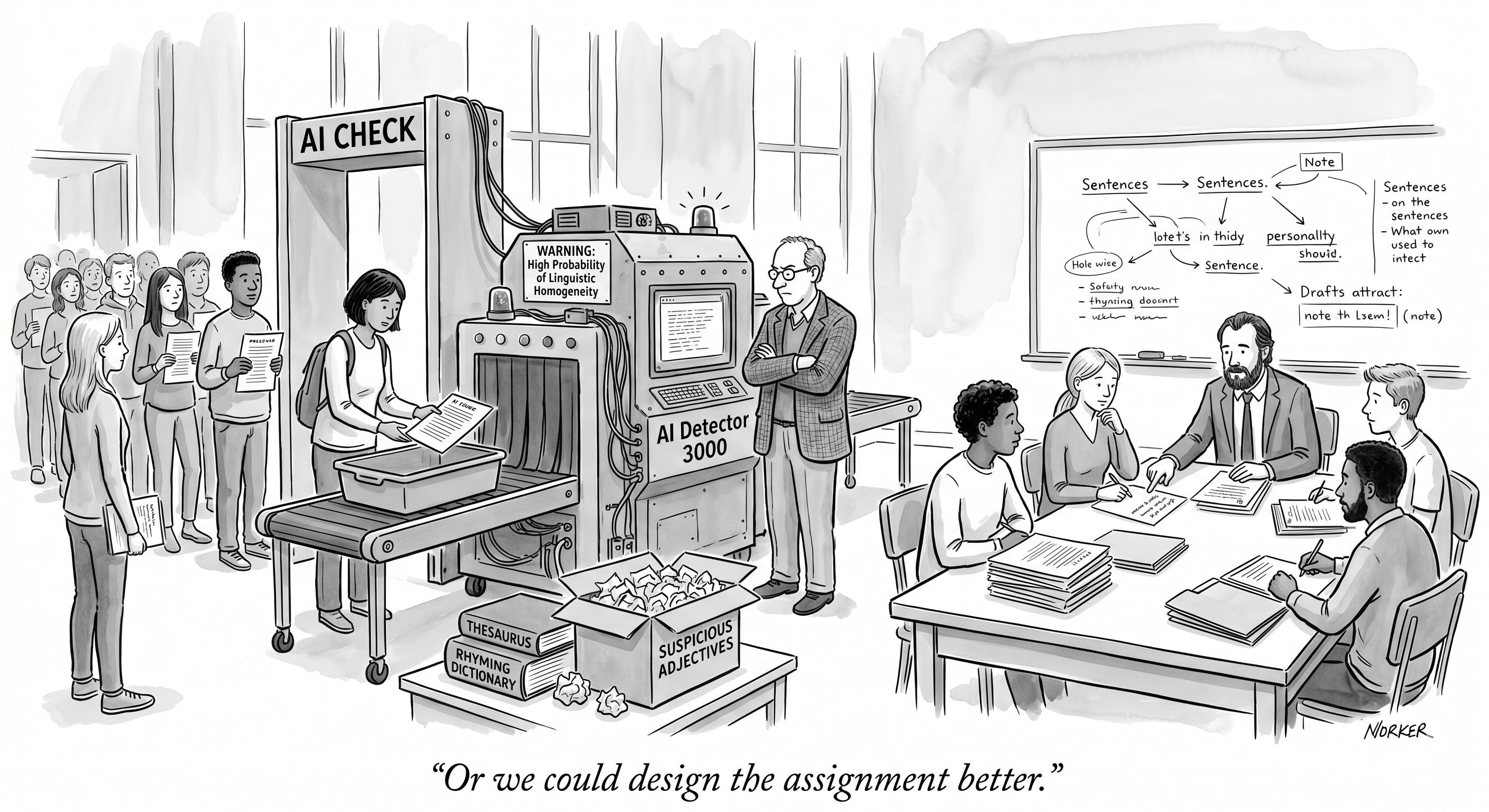
The guidance rests on four pillars:
Effective Course and Assessment Design, Not Policing. The first line should be adopted by every academic institution worldwide as part of their AI policy: “The general philosophy Academic Affairs promotes is that the primary focus should be on fostering academic integrity through effective course and assessment design (emphasis mine) rather than by engaging in increasingly complex efforts to police students.”
Student Intellectual Property and Copyright. “UT Austin students own the intellectual property and copyright of any work they create in a course. Submitting student work (even if it is anonymized) into any AI Detection Software (or any other third-party software) without a University contract or purchase order in place may be a violation of that student’s copyright and intellectual property rights.”
Ban of AI Detection Software. “The University prohibits the use of all third-party software, including AI Detection Software (ADS, software used to flag or otherwise detect output as AI-generated), to evaluate student work or assignments unless a University contract or purchase order is in place.” Moreover, “The University does not endorse the use of AI Detection Software and does not have any central contracts or purchase orders with active AI Detection Software features.”
Personal Liability. “Instructors who purchase AI Detection Software on a personal credit card or a Procard may be personally liable for paying any damages or legal costs which may occur because of the purchase. Personal credit cards, and more specifically Procards, do not have thorough controls or purchase review in place by the University prior to purchase.”
My post tomorrow will be on the CoreLMS project and how the next release, coming out later this week, moves it towards more “effective course and assessment design”.